
(And it’s not very pretty.)
By mid-twentieth century, humans had altered the Earth to such an extent as to mark the start of a new geologic epoch named the Anthropocene, concluded an international consortium of researchers in a January issue of the preeminent journal Science.
Scientists divide Earth’s 4.5 billion year history into so-called epochs or time units based on major shifts in the composition and state of the planet as recorded in distinct stratifications in rocks, sediments and glacier ice. Previous transitions from one geologic epoch to the next were triggered by either cyclical drivers of climate change, like variations in the Earth’s orbit or solar radiation, or irregular events like volcanic eruptions. The most recent epoch for example, the Holocene, spanned ~12,000 years and was ushered in by a period of interglacial global warming. [Read more…]






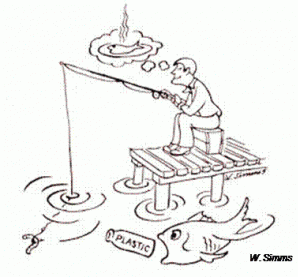
 You’d think that finding far less plastic pollution on the ocean’s surface than scientists expected would be something to cheer about. The reality, however, is that this is likely bad news, for both the ocean food web and humans eating at the top. Ingestion of tiny plastic debris by sea creatures likely explains the plastics’ disappearance and exposes a worrisome entry point for risky chemicals into the food web.