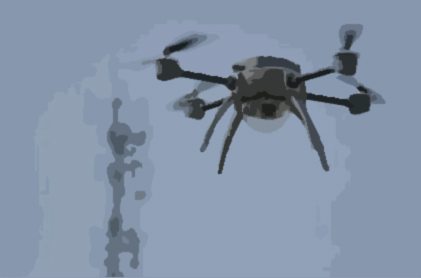
“There is very good reason to think that once the current controversies and public spotlight on domestic drones fades away, we will see a push for drones armed with lethal weapons.”
By Diego Cupolo / Upside Down World
Over the last decade, drones have made headlines as tools for covert bombing campaigns in the Middle East and the Horn of Africa. Yet remote-controlled warfare is just one of many functions Unmanned Aerial Vehicles (UAVs) can provide as non-lethal models become less expensive and more accessible to countries around the world.
From aerial surveillance to three-dimensional geographic modeling of rugged terrains and even speedy pizza delivery service, manufacturers have begun to promote the infinite capabilities of domestic drones. At the same time, they are specifically targeting developing markets in Latin America for the martial use of drones in law enforcement and military operations.
In response, human rights groups have been raising concerns over these fast-evolving technologies, citing the potential for abuse by various state agencies. Recent advancements have allowed governments to adopt and, in some cases, begin building their own UAV fleets, but regulation on domestic drone use remains non-existent throughout the Americas aside from preliminary laws adopted in Brazil, Canada and the United States.
“The biggest concern presented by drones is they will become a tool for routine mass surveillance,” said Jay Stanley, a senior policy analyst for the American Civil Liberties Union. “Fleets of small, inexpensive self-launching drones could easily spread over a town, network together and provide comprehensive, 24-7 dragnet surveillance or a single high-flying drone could accomplish the same thing. This technology already exists. It’s called Wide Area Surveillance and it’s being used overseas by the US military.” [Read more…]