• Home
  • Subscribe!
  • About Us / FAQ
  • Staff
  • Columns
  • Awards
  • Terms of Use
  • Facebook
  • Twitter
  • Contact
  • OB Rag
  • Donate

San Diego Free Press

Grassroots News & Progressive Views

You are here: Home / Archives for Columns / History of Neighborhood House

The History of Neighborhood House in Logan Heights: Laura Rodriguez, the Family Matriarch Who Became Barrio Activist

October 25, 2014 by Maria E. Garcia

By Maria E. Garcia

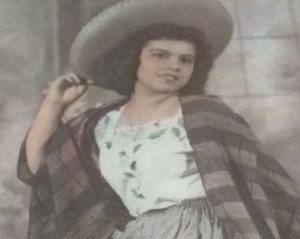
On October 5, 1970, Logan Heights resident Laura Rodriguez chained herself to the Neighborhood House doors, setting in motion what has come to be known as The Occupation.  The fearless sixty-one year old grandmother chose this very public display of activism to force a decision on the future of Neighborhood House.

The services that Neighborhood House had provided to the community for decades were  reduced and eliminated as that location evolved in the mid-1960’s into an administrative office. Laura and Logan Heights activists would ultimately win this battle, with Neighborhood House becoming a Centro de Salud– health clinic– as the community had demanded.

I will describe in much more detail the actual occupation in a future article.  On this October anniversary, Laura Rodriguez deserves her own series of articles that traces her life from her Logan Heights beginnings to the years she lived at the Marston House and her return to Logan Heights.   [Read more…]
Share this:

  • Share on Facebook (Opens in new window) Facebook
  • Share on X (Opens in new window) X
  • More
  • Share on LinkedIn (Opens in new window) LinkedIn
  • Email a link to a friend (Opens in new window) Email
  • Print (Opens in new window) Print
  • Share on Reddit (Opens in new window) Reddit
  • Share on WhatsApp (Opens in new window) WhatsApp

Like this:

Like Loading...

Filed Under: Activism, Culture, Editor's Picks, History of Neighborhood House Tagged With: Barrio Logan, Logan Heights

The History of Neighborhood House in Logan Heights: Mary Dora Garcia and the Lucky 13 Club

October 18, 2014 by Maria E. Garcia

By Maria E. Garcia

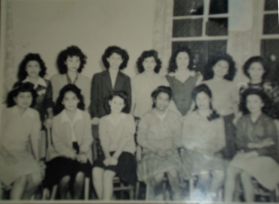
Lucky 13, June 1948

Mary Dora Hollman Garcia grew up on the 1800 block of Newton Avenue in Logan Heights and attended kindergarten at Neighborhood House during the 1930’s. In the days before Lowell Elementary School was built she attended Burbank School.

The walk to Burbank School was carried out under the watchful eyes of families and neighbors. Dora would leave her house with her aunt watching her walk down the street. She would walk two doors down, pick up a little friend there and then they would walk by Irene Mena’s house and pick her up.

With every person that was added to the group another neighbor or family member would take over the responsibility of watching the kids walk to school. The last stop brought the walking brigade to a total of eight children walking to Burbank School. …   [Read more…]

Share this:

  • Share on Facebook (Opens in new window) Facebook
  • Share on X (Opens in new window) X
  • More
  • Share on LinkedIn (Opens in new window) LinkedIn
  • Email a link to a friend (Opens in new window) Email
  • Print (Opens in new window) Print
  • Share on Reddit (Opens in new window) Reddit
  • Share on WhatsApp (Opens in new window) WhatsApp

Like this:

Like Loading...

Filed Under: Culture, History of Neighborhood House Tagged With: Barrio Logan, Logan Heights

The History of Neighborhood House in Logan Heights: Sailors, Pachucos and Life In-Between

October 11, 2014 by Maria E. Garcia

Part III of the Not so Great Depression and World War II Come to Logan Heights

By Maria E. Garcia

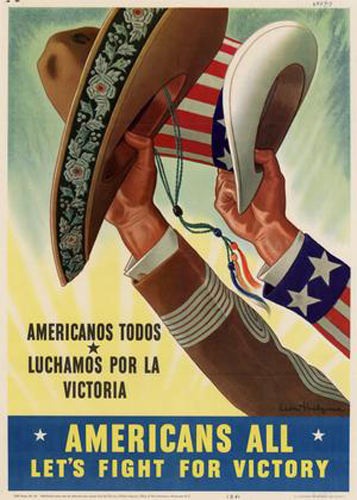
World War II PosterThe Depression and the advent of World War II brought social and economic change to Logan Heights. Residents who lost their jobs and savings during the Depression found a scapegoat for their anger and fears in the form of their neighbors of Mexican descent.
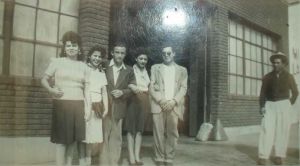
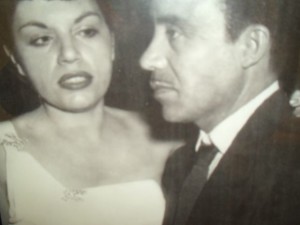
These residents, many of whom who had been actively recruited by American business owners, ranchers and farmers in the early twentieth century were now seen as job stealers and a burden to the welfare system. They were denied employment, dropped from the welfare rolls and actively repatriated to Mexico. Sixty percent of the repatriated individuals were American citizens.

Several men that I have interviewed told of their mothers crying when they heard we were at war. Men were enlisting and being drafted. The whittling away of the Logan Heights population which first occurred during the repatriation, became even more apparent when so many of the men, often the household’s primary breadwinner, went off to war. An unprecedented number of women entered the workforce in the canneries and defense industry as a result.

But there was an influx of a new group in Logan Heights–sailors. …   [Read more…]

Share this:

  • Share on Facebook (Opens in new window) Facebook
  • Share on X (Opens in new window) X
  • More
  • Share on LinkedIn (Opens in new window) LinkedIn
  • Email a link to a friend (Opens in new window) Email
  • Print (Opens in new window) Print
  • Share on Reddit (Opens in new window) Reddit
  • Share on WhatsApp (Opens in new window) WhatsApp

Like this:

Like Loading...

Filed Under: Culture, Editor's Picks, Encore, History of Neighborhood House, Military, War and Peace Tagged With: Barrio Logan, Logan Heights

The History of Neighborhood House in Logan Heights: Life in Logan Heights During War Time

October 4, 2014 by Maria E. Garcia

Part II of the Not-so-great Depression and WWII

By Maria E. Garcia

Part I of this series presented a glimpse of life in Logan Heights during the the Great Depression. The Mexican Repatriation Act resulted in a massive, largely forced return of residents of Mexican descent in the US back to Mexico in the 1930’s. It is estimated that sixty percent of these individuals who returned to Mexico were American citizens. Last week’s article talks about one Logan Heights family that stayed– the Kennistons– and one family that left– the Leybas.

The months leading up to WWII and the declaration of war had a tremendous impact on life in Logan Heights. The radio and the newspaper were constantly focusing not only on the war, but on what could happen in San Diego should the war come to the shores of the United States. San Diego was definitely a Navy town with added patrols on the bay and Quonset huts springing up around various locations, some right in the middle of the barrio.

Several of those interviewed spoke of their mothers crying, knowing that their sons would soon be drafted and be off to fight in foreign places.   [Read more…]

Share this:

  • Share on Facebook (Opens in new window) Facebook
  • Share on X (Opens in new window) X
  • More
  • Share on LinkedIn (Opens in new window) LinkedIn
  • Email a link to a friend (Opens in new window) Email
  • Print (Opens in new window) Print
  • Share on Reddit (Opens in new window) Reddit
  • Share on WhatsApp (Opens in new window) WhatsApp

Like this:

Like Loading...

Filed Under: Culture, History of Neighborhood House, War and Peace Tagged With: Barrio Logan, Logan Heights

The History of Neighborhood House in Logan Heights: Johnny Rubalcava

September 20, 2014 by Maria E. Garcia

By Maria E. Garcia

Johnny Rubalcava is a very young 90-year-old man. He has been married five times, his last marriage lasting 30 years. He has been a widower for the last two years. When you look at Mr. Rubalcava you think you’re speaking to a man of 70, not only because of his wonderful memory, but because he carries himself like a much younger man.

He started going to the Neighborhood House at the age of six, during the 1930’s. Like so many of the other people I interviewed, Mr. Rubalcava remembers Neighborhood House as the place where kids in Logan Heights learned to dance, play on sports teams and enjoy occasional trips to camp.   [Read more…]

Share this:

  • Share on Facebook (Opens in new window) Facebook
  • Share on X (Opens in new window) X
  • More
  • Share on LinkedIn (Opens in new window) LinkedIn
  • Email a link to a friend (Opens in new window) Email
  • Print (Opens in new window) Print
  • Share on Reddit (Opens in new window) Reddit
  • Share on WhatsApp (Opens in new window) WhatsApp

Like this:

Like Loading...

Filed Under: Culture, History of Neighborhood House, Sports Tagged With: Barrio Logan, Logan Heights

The History of Neighborhood House in Logan Heights: Mary Fisher Garcia

September 13, 2014 by Maria E. Garcia

Memories from The Depression to Duet Garcia

By Maria E. Garcia

Mary Fisher Garcia attended Neighborhood House as a child during the 1930’s. Miss Anita Jones was the director of Neighborhood House at the time. Jones had trained under Jane Addams, lived in Mexico for a number of years and spoke fluent Spanish. Mary credits Miss Jones with starting many of the programs that became so popular with the kids that attended Neighborhood House.

She remembers Miss Jones as being very strict, but she was also someone you could go to if you had a problem. Mary, like many of the other people I have interviewed, remembers the big fruit truck delivering fruit to the neighborhood and parking in the alley behind Neighborhood House. Word of the free fruit would spread quickly throughout the neighborhood. Free fresh fruit was clearly not taken for granted in the 30’s.   [Read more…]

Share this:

  • Share on Facebook (Opens in new window) Facebook
  • Share on X (Opens in new window) X
  • More
  • Share on LinkedIn (Opens in new window) LinkedIn
  • Email a link to a friend (Opens in new window) Email
  • Print (Opens in new window) Print
  • Share on Reddit (Opens in new window) Reddit
  • Share on WhatsApp (Opens in new window) WhatsApp

Like this:

Like Loading...

Filed Under: History of Neighborhood House Tagged With: Barrio Logan, Logan Heights

A History of Neighborhood House in Logan Heights: Paul “Paulie” Torres

August 30, 2014 by Maria E. Garcia

By Maria Garcia

Paul “Paulie” Torres is a retired longshoreman who attended Neighborhood House from 1947 to 1954. His family moved to Logan Heights from the Little Italy area of San Diego. Paulie says there was a little barrio located in the Little Italy area with several Mexican families living there. Little Italy was in the proximity of the canneries and as far as Mexicans could live in the downtown vicinity–Point Loma to the north was the dividing line where whites and ethnic Europeans lived.

Like many others, Paulie had heard stories about the Logan Heights guys and felt intimidated when he first moved there. Within a short period of time, Paulie fit right in with the other boys who called Neighborhood House their other home. He states in a straightforward manner that the reason everyone called it Neighborhood House was because everyone in the neighborhood went there. He recalls the boys sitting there on the steps, talking, laughing, hanging out for as long as they could.   [Read more…]

Share this:

  • Share on Facebook (Opens in new window) Facebook
  • Share on X (Opens in new window) X
  • More
  • Share on LinkedIn (Opens in new window) LinkedIn
  • Email a link to a friend (Opens in new window) Email
  • Print (Opens in new window) Print
  • Share on Reddit (Opens in new window) Reddit
  • Share on WhatsApp (Opens in new window) WhatsApp

Like this:

Like Loading...

Filed Under: Culture, Editor's Picks, Education, Encore, History of Neighborhood House, Sports Tagged With: Barrio Logan, Logan Heights

A History of Neighborhood House in Logan Heights: Testing the Meaning of “Americanized” Part II

August 23, 2014 by Maria E. Garcia

From the Toltec Club to the election of Pete Chacon and la lucha to get there

By Maria Garcia

Last week’s article introduced readers to Leonard Fierro, who grew up in Logan Heights, attended Neighborhood House in the 1930’s and upon returning from World War II began shaping and chronicling the history of Mexican Americans in San Diego. It is Leonard who wrote “We had just fought the war for liberty and justice and when we came home we found we didn’t have it in our city.”

The problems and frustrations of the Latino community had been constantly there, as noted in so many of the prior interviews, but it wasn’t until the establishment of the Toltec Club that political involvement was seen as the remedy to discrimination. The Toltec Club was initially envisioned as a social club with dances. The resistance members faced transformed it into a forerunner of the Chicano movement and laid the foundation for the political activism of the 1960’s.   [Read more…]

Share this:

  • Share on Facebook (Opens in new window) Facebook
  • Share on X (Opens in new window) X
  • More
  • Share on LinkedIn (Opens in new window) LinkedIn
  • Email a link to a friend (Opens in new window) Email
  • Print (Opens in new window) Print
  • Share on Reddit (Opens in new window) Reddit
  • Share on WhatsApp (Opens in new window) WhatsApp

Like this:

Like Loading...

Filed Under: Editor's Picks, History of Neighborhood House Tagged With: Barrio Logan, Logan Heights

The History of Neighborhood House in Logan Heights: Testing the Meaning of “Americanized,” Part I

August 16, 2014 by Maria E. Garcia

The Castro Sisters, Frank Peñuelas, Leonard Fierro and the beginnings of the Toltec Club

By Maria Garcia

One of the goals of the settlement house movement, which was established in urban centers at the beginning of the twentieth century, was to “Americanize” the immigrant populations that had settled in those cities. When Neighborhood House was established in 1914 as the only United States settlement house on the Mexican border, its role was to “uplift” Mexican immigrants in the Logan Heights community and Americanize them in doing so.

The Americanization process included everything from introducing Mexican families to white flour and white bread to the provision of the first English as a Second Language (ESL) classes in the city to support for cultural, social and recreational activities in which athletics programs for the boys were particularly prominent.

When I recently spoke to Rose Castro, she provided a particularly illuminating comment about Neighborhood House–“They taught us leadership!” …   [Read more…]

Share this:

  • Share on Facebook (Opens in new window) Facebook
  • Share on X (Opens in new window) X
  • More
  • Share on LinkedIn (Opens in new window) LinkedIn
  • Email a link to a friend (Opens in new window) Email
  • Print (Opens in new window) Print
  • Share on Reddit (Opens in new window) Reddit
  • Share on WhatsApp (Opens in new window) WhatsApp

Like this:

Like Loading...

Filed Under: Activism, Editor's Picks, Encore, History of Neighborhood House Tagged With: Barrio Logan, Logan Heights

The History of Neighborhood House in Logan Heights: Garden Parties at the Marston House and Other Fundraising

August 9, 2014 by Maria E. Garcia

SDFP exclusive series The History of Neighborhood House: From 1918 to the occupation in 1972

By Maria Garcia

Neighborhood House, like other settlement houses throughout the country, was established through largely philanthropic efforts with the intent of social reform. Its goals were “To understand its Mexican neighbors; to interpret the needs of the community; to perform the intimate and friendly service of a good neighbor; to direct needed educational and recreational work. ”

Funds were initially raised by the College Women’s Club. Neighborhood House, upon its incorporation as a private non-profit in 1914, became a charter member of the Community Chest, the precursor of today’s United Way. It would depend upon an extensive network of donors and continued philanthropic efforts to maintain its presence in Logan Heights.

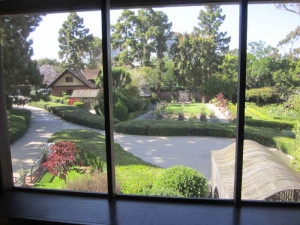
The local history of Neighborhood House is in many ways the history of prominent San Diegans. In the early years of the Neighborhood House the fundraisers held in the beautiful gardens of the Marston House were a main source of revenue.   [Read more…]

Share this:

  • Share on Facebook (Opens in new window) Facebook
  • Share on X (Opens in new window) X
  • More
  • Share on LinkedIn (Opens in new window) LinkedIn
  • Email a link to a friend (Opens in new window) Email
  • Print (Opens in new window) Print
  • Share on Reddit (Opens in new window) Reddit
  • Share on WhatsApp (Opens in new window) WhatsApp

Like this:

Like Loading...

Filed Under: Culture, Editor's Picks, History of Neighborhood House Tagged With: Barrio Logan, Logan Heights

The History of Neighborhood House in Logan Heights: Emma Lopez

August 2, 2014 by Maria E. Garcia

SDFP exclusive series The History of Neighborhood House: From 1918 to the occupation in 1972

By Maria Garcia

Emma Lopez is a spunky lady who will turn eighty-eight in November. She was born at 821 Beardsley in Logan Heights and started attending Neighborhood House when she was around nine years old, in the early 1930’s. Her parents owned the Neighborhood Café which they had purchased in 1935. The Neighborhood Café was next door to Neighborhood House. Like the others interviewed Emma has very fond memories not only of Neighborhood House but of the Logan Heights community.

It has been very difficult finding women who attended Neighborhood House. Unlike the boys who spent most of their day at Neighborhood House the girls took a specific class and then went home. Emma’s participation in Neighborhood House activities reflected that social expectation. While she was allowed to attend activities at a young age as she got into her mid-teens her participation was more limited. Emma’s independent streak, however, exposed her to a few more adventures than other girls of that time.   [Read more…]

Share this:

  • Share on Facebook (Opens in new window) Facebook
  • Share on X (Opens in new window) X
  • More
  • Share on LinkedIn (Opens in new window) LinkedIn
  • Email a link to a friend (Opens in new window) Email
  • Print (Opens in new window) Print
  • Share on Reddit (Opens in new window) Reddit
  • Share on WhatsApp (Opens in new window) WhatsApp

Like this:

Like Loading...

Filed Under: Culture, Editor's Picks, Encore, History of Neighborhood House Tagged With: Barrio Logan, Logan Heights

A History of Neighborhood House in Logan Heights: Mary Hart Taylor and the Health Clinic, 1914 to 1938

July 26, 2014 by Maria E. Garcia

SDFP exclusive series The History of Neighborhood House: From 1918 to the occupation in 1972

By Maria Garcia

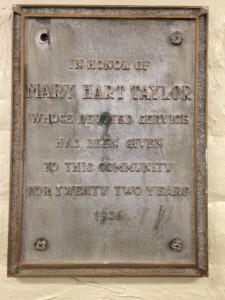
For over two decades Mary Hart Taylor directed the health clinic and various core health programs at Neighborhood House. She was well liked and respected by the community. It was a well-known fact in Logan Heights that if your child became ill in the middle of the night, you knocked on Miss Taylor’s door and you would be allowed in or she would follow you to your home to administer medical advice and care.

One of the reasons that Neighborhood House was established was to address the high mortality rate of Mexican children in Logan Heights.   [Read more…]

Share this:

  • Share on Facebook (Opens in new window) Facebook
  • Share on X (Opens in new window) X
  • More
  • Share on LinkedIn (Opens in new window) LinkedIn
  • Email a link to a friend (Opens in new window) Email
  • Print (Opens in new window) Print
  • Share on Reddit (Opens in new window) Reddit
  • Share on WhatsApp (Opens in new window) WhatsApp

Like this:

Like Loading...

Filed Under: Activism, Culture, Encore, History of Neighborhood House Tagged With: Barrio Logan, Logan Heights

  • « Previous Page
  • 1
  • 2
  • 3
  • 4
  • 5
  • Next Page »
San Diego Free Press Has Suspended Publication as of Dec. 14, 2018

Let it be known that Frank Gormlie, Patty Jones, Doug Porter, Annie Lane, Brent Beltrán, Anna Daniels, and Rich Kacmar did something necessary and beautiful together for 6 1/2 years. Together, we advanced the cause of journalism by advancing the cause of justice. It has been a helluva ride. "Sometimes a great notion..." (Click here for more details)

#ResistanceSD logo; NASA photo from space of US at night

Click for the #ResistanceSD archives

Make a Non-Tax-Deductible Donation

donate-button

A Twitter List by SDFreePressorg

KNSJ 89.1 FM
Community independent radio of the people, by the people, for the people

"Play" buttonClick here to listen to KNSJ live online

At the OB Rag: OB Rag

Driver Who Killed Tracy Condon as She Sat on the Curb Sentenced to 270 Days in Work Furlough

Monitoring San Diego From the Coast

Former FBI Director Comey Surrenders Over Charge of Threatening Trump’s Life With Seashells

US Supreme Court Just Gutted the Voting Rights Act

Who Will Represent the Peninsula? District 2 Candidates Take Questions at Liberty Station

  • Sitemap
  • Contact
  • About Us
  • Terms of Use

©2010-2017 SanDiegoFreePress.org

Code is Poetry

%d